
Blog · Wedding Planning
Polaroid Guest Book vs QR Guest Camera: Which Is Right for Your Wedding?
Comparing a polaroid guest book vs QR guest camera for your wedding? Here's a side-by-side breakdown of pros, cons, costs, and guest experience.
· 5 min read · WedPOV Team
Polaroid Guest Book vs QR Guest Camera: The Modern Wedding Dilemma
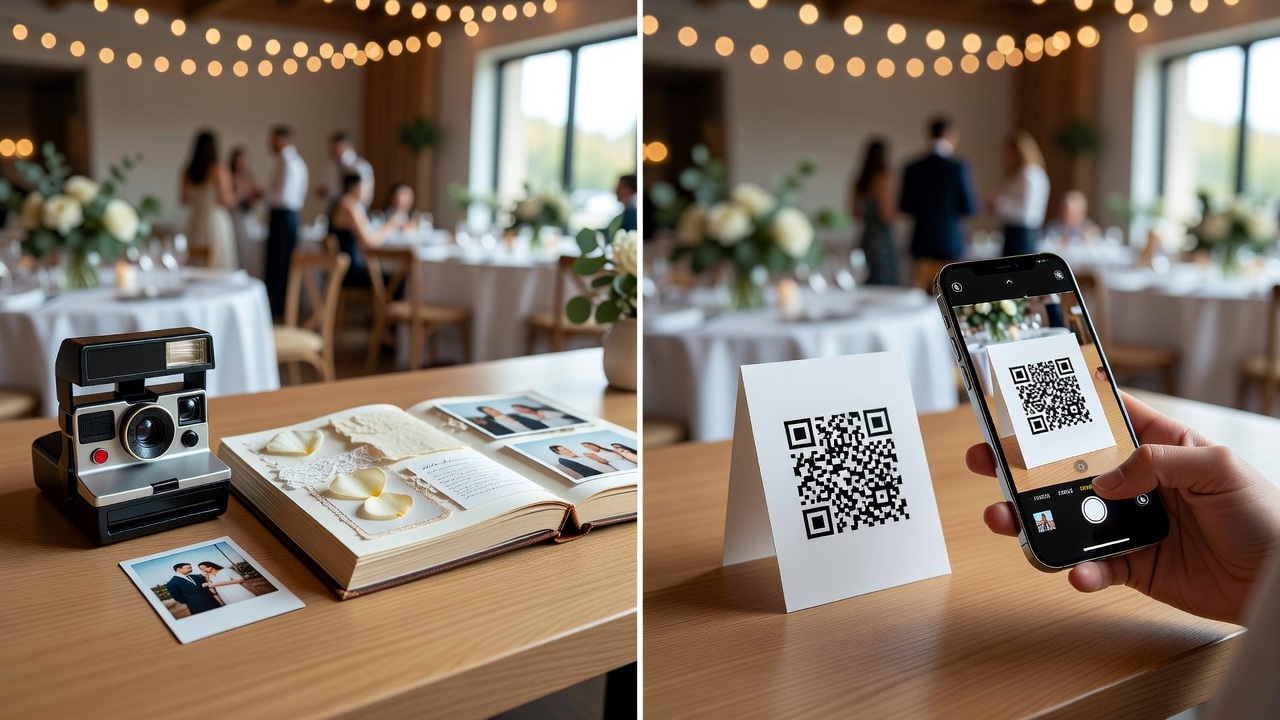
The polaroid guest book vs QR debate is one of the most common photo-favor decisions couples face today. Both options give guests a way to leave visual memories, but they couldn't be more different in execution. One leans on nostalgia and tangible charm. The other embraces smartphones and cloud convenience. This guide breaks down every factor—setup, cost, time, guest experience, and keepsake quality—so you can choose the one that fits your wedding vibe.
What Is a Polaroid Guest Book?
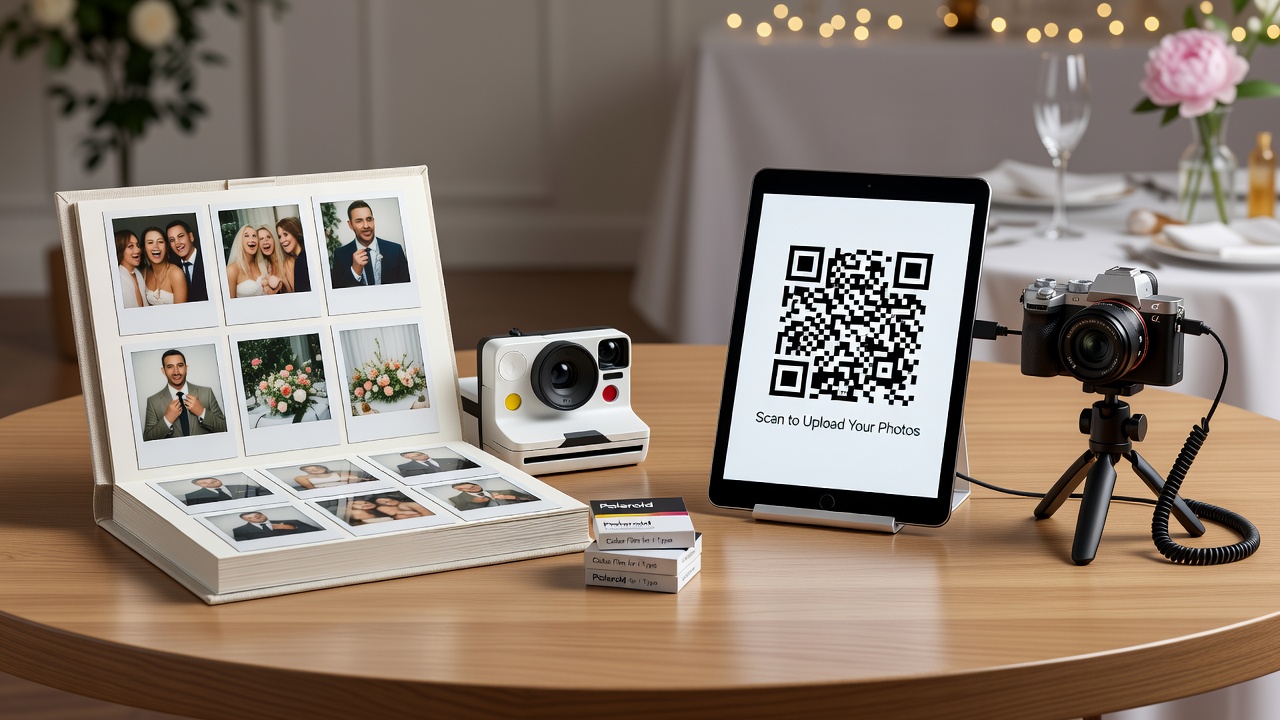
A polaroid guest book combines instant-print cameras (like the Polaroid Now or Instax Mini) with a blank scrapbook. Guests snap a photo, wait for it to develop, stick it on a page, and write a message next to it. The result is a physical, handmade album you take home the same night.
Pros of a Polaroid Guest Book
- Tangible keepsake: You leave the reception with a completed album—no waiting, no downloading, no printing later.
- Nostalgic charm: The vintage look of instant prints fits rustic, boho, and classic wedding themes beautifully.
- Encourages handwriting: Guests write personal notes directly beside their photos, adding a layer of warmth that digital text can't match.
- No tech barrier: Grandparents and kids who aren't comfortable with smartphones can participate just as easily as anyone else.
- Self-contained activity: It doubles as entertainment—people love watching their photo develop and gathering around the camera.
Cons of a Polaroid Guest Book
- Film cost adds up: Each shot costs roughly $1–$2 in film. With 100+ guests, you could spend $150–$300 on film alone.
- Limited shots per guest: Film is expensive, so you often ration it—one or two photos per guest maximum.
- Quality is inconsistent: Lighting conditions, shaky hands, and expired film can lead to dark, blurry, or washed-out prints.
- One photo at a time: If you have a single camera, expect a bottleneck. Guests queue up, and some give up rather than wait.
- Album space is finite: A 60-page album fills up fast. Extra guests mean extra pages—or blank spots if pages run out.
- Photos fade over time: Polaroid and Instax prints are susceptible to UV and humidity. Without proper storage, colors shift within a few years.
What Is a QR Guest Camera?
A QR guest camera setup places a printed QR code on each table or at a dedicated station. Guests scan it with their phone, which opens a web-based photo capture page—no app download needed. They snap a photo (or several), add a message, and submit. All images are collected in a shared online gallery that the couple can browse, download, and print at their leisure.
Pros of a QR Guest Camera
- Unlimited photos: No film to buy or ration. Guests can take as many shots as they want, from different angles and moments throughout the night.
- Zero consumable cost: After the initial platform fee (often $20–$60), there's no per-photo expense. No film, no spare cameras, no extra albums.
- Everyone has a camera: Rather than waiting for one shared device, every guest's phone becomes a capture station. No bottlenecks, no queues.
- Candid moments captured: Guests can snap photos from their seats, on the dance floor, at the bar—anywhere. You get a wider, more candid range of moments.
- Cloud storage and sharing: The gallery lives online. You can share it with guests afterward, download high-res files, and print only the ones you love.
- Digital messages too: Many platforms let guests add text messages or voice notes alongside their photos.
Cons of a QR Guest Camera
- No physical keepsake on the night: You walk away with a link, not a book. If you want a printed album, that's a separate project after the wedding.
- Relies on guest phones: Guests must have a smartphone, scan a code, and take the initiative. Some older guests may skip it entirely.
- Internet dependency: Most QR camera platforms require a Wi-Fi or cellular connection to upload photos. Rural venues with poor signal can be a problem.
- Photo quality varies by phone: A guest with a five-year-old phone and a cracked screen will produce a very different image than someone with the latest flagship device.
- Less interactive: Scanning a QR code is quick and private—it doesn't have the same communal, gather-around-the-camera energy as a polaroid station.
Side-by-Side Comparison
Setup and Space
Polaroid: You need a table, the camera(s), film, pens, tape or photo corners, and the album. Allow roughly 4–6 feet of table space. Setup takes 10–15 minutes.
QR Camera: You need printed QR code cards or signs. That's it. Some couples add a small display stand or a tablet with the gallery open in slideshow mode. Setup is under 5 minutes.
Cost
Polaroid: $80–$300+ depending on camera model, film quantity, and album quality. Film is the biggest ongoing expense.
QR Camera: $20–$60 for a hosted QR photo platform. No consumables. If you later print a photo book, budget an additional $30–$80.
Time During the Reception
Polaroid: Guests spend 3–5 minutes per group—snap, wait for development, mount, write. A queue can form during peak moments (after dinner, before dancing).
QR Camera: Guests spend 30–60 seconds—scan, snap, submit. No waiting in line, and photos can be taken throughout the entire event.
Guest Experience
Polaroid: High tactile engagement. Guests love the physicality. It's an activity, not just a task. Best for smaller weddings (under 120 guests) where lines stay manageable.
QR Camera: Low-friction and flexible. Guests participate at their own pace from anywhere. Best for larger weddings or tech-savvy crowds where convenience wins.
The Final Keepsake
Polaroid: A one-of-a-kind physical album, completed that night. Imperfect, charming, and immediately displayable on your shelf.
QR Camera: A digital gallery with hundreds of high-resolution photos. You can curate, print, and share selectively. More photos, but requires post-wedding effort to turn into something tangible.
Which Should You Choose?
Choose a polaroid guest book if your wedding is intimate (under 100 guests), your theme is rustic or vintage, and you value a finished physical keepsake above everything. It's the warmer, more hands-on option.
Choose a QR guest camera if you have a larger guest list, want maximum photo coverage, prefer to avoid ongoing film costs, and are comfortable with a digital-first keepsake. It's the practical, modern choice.
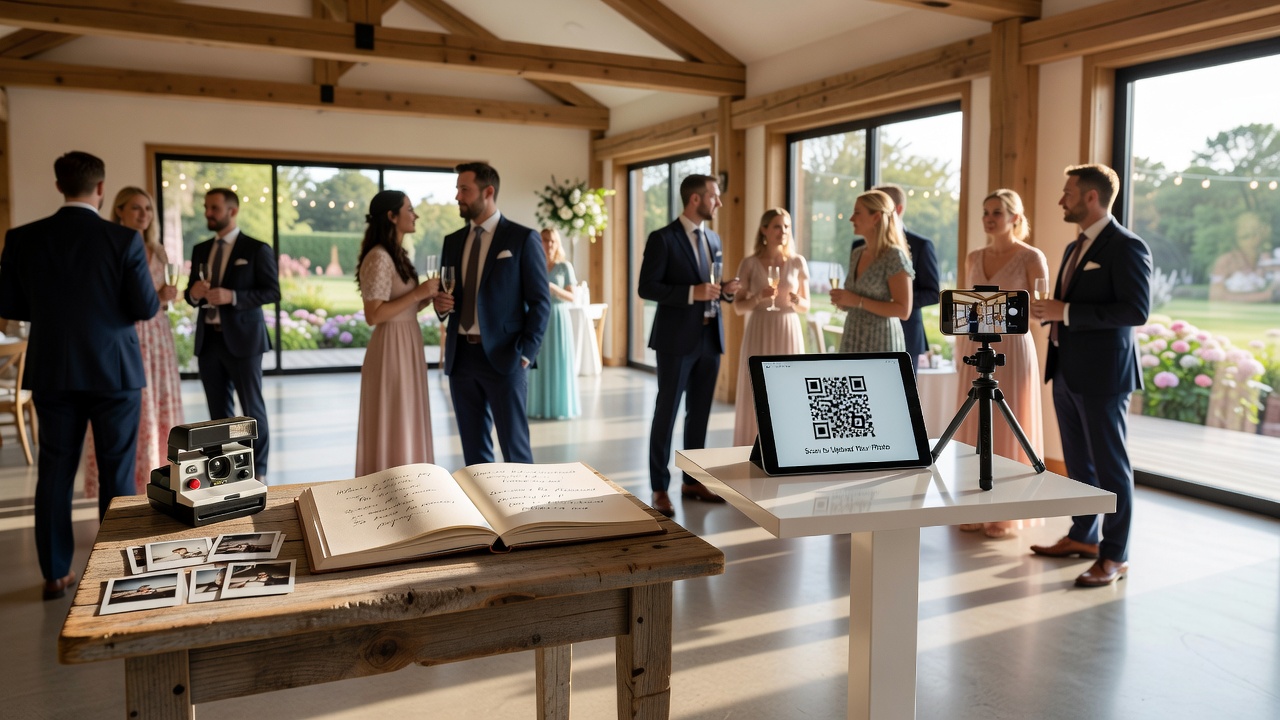
And if you can't decide—do both. A polaroid station near the entrance and QR codes on each table give guests the best of both worlds: a physical album for the night and a digital gallery for everything else.
Frequently Asked Questions
Can I use both a polaroid guest book and a QR guest camera?
Absolutely. Many couples set up a polaroid station for the dedicated album experience and place QR codes on tables for guests who prefer using their phones. You'll get a curated physical album plus a broader digital gallery.
How much film should I buy for a polaroid guest book?
Plan for roughly 1.5 shots per guest. For 100 guests, buy 150–200 exposures. It's better to have leftover film than to run out mid-reception.
Do QR guest camera platforms work without Wi-Fi?
Most require an internet connection to upload photos in real time. If your venue has poor signal, look for platforms that support offline capture and batch upload, or provide a mobile hotspot.
Which option is better for older guests?
A polaroid guest book is generally more accessible for older guests who may not be comfortable scanning QR codes or navigating a web page on their phone. The instant camera is intuitive—point, press, wait.
Quick answers
- Can I use both a polaroid guest book and a QR guest camera?
- Absolutely. Many couples set up a polaroid station for the dedicated album experience and place QR codes on tables for guests who prefer using their phones. You'll get a curated physical album plus a broader digital gallery.
- How much film should I buy for a polaroid guest book?
- Plan for roughly 1.5 shots per guest. For 100 guests, buy 150–200 exposures. It's better to have leftover film than to run out mid-reception.
- Do QR guest camera platforms work without Wi-Fi?
- Most require an internet connection to upload photos in real time. If your venue has poor signal, look for platforms that support offline capture and batch upload, or provide a mobile hotspot.
- Which option is better for older guests?
- A polaroid guest book is generally more accessible for older guests who may not be comfortable scanning QR codes or navigating a web page on their phone. The instant camera is intuitive—point, press, wait.